
Views: 0 Author: Site Editor Publish Time: 2026-11-10 Origin: Site


Did you know a stalled motor can burn out in mere minutes? Locked rotors draw massive current spikes. Standard breakers usually trip way too late. The result is melted windings, ruined equipment, and massive repair bills.
In this comprehensive guide, we explore how an intelligent electrical panel upgrade solves this exact problem. You will learn how modern digital monitoring saves both your critical equipment and your maintenance budget.
Key Takeaways
A stalled motor typically draws 5 to 8 times its normal running current. Swift disconnection is mandatory to prevent thermal degradation in the copper windings.
Advanced digital monitoring spots this specific current anomaly in real-time. It executes a trip command based on precise, user-defined parameters.
Smart devices transmit instant diagnostic alerts directly to your phone. This drastically cuts down troubleshooting time and prevents prolonged downtime.
Continuous data logging unlocks predictive maintenance. You can spot mechanical friction or bearing wear months before a complete stall happens.
Before diving into advanced protection, we need to look at the physics of a motor stall. Engineers often call this a locked rotor condition. Electrical power flows continuously to the motor, but a mechanical jam stops the rotor from turning.
When an AC induction motor starts, it needs a brief surge of current to overcome mechanical inertia. However, if the rotor is jammed, the motor gets trapped in this high-demand startup state. The current drawn during a stall is known as Locked Rotor Amps, or LRA. Field data proves that LRA is typically 500 to 800 percent higher than the motor's Full Load Amps.
Take a standard motor designed to run at 10 amps. During a stall, it might suddenly draw 60 to 80 amps. The rotor is not moving. Therefore, this massive influx of electrical energy cannot convert into mechanical work. It converts directly into raw heat within the copper windings.
The primary threat of a locked rotor is exponential heat generation. Joule's heating law dictates a brutal reality. If the current increases by a factor of 6, the generated heat increases by a staggering factor of 36.
Imagine a commercial HVAC compressor struggling against a blocked valve. The motor hums aggressively. It cannot turn. Inside, the copper coils rapidly heat up like a toaster element. This rapid temperature rise quickly exceeds the thermal limits of the internal insulation. Within minutes, the insulation melts away. This triggers phase-to-phase shorts, catastrophic motor failure, and a severe risk of electrical fire.
The core function of a smart circuit breaker is shifting electrical protection from a slow mechanical reaction to an active, data-driven process.
Traditional breakers rely on the physical heating of a bimetallic strip to trigger a trip. Modern intelligent protectors take a completely different approach. They utilize internal Current Transformers and microprocessors. A high-quality 1P+N 63A device samples the electrical waveform thousands of times per second. This metering function continuously calculates the True Root Mean Square amperage flowing to the motor. By digitizing the current flow, the device maintains an exact, real-time profile of electrical consumption.
To prevent nuisance tripping, a protection device must tell the difference between a normal startup and a dangerous stall. Advanced breakers apply the principles of Electrical Signature Analysis.
When a motor starts, the inrush current spikes high but decays rapidly. This usually happens within 0.5 to 2 seconds as the rotor reaches synchronous speed. In a stalled condition, the current spikes and stays flat at the LRA level. The microprocessor analyzes this time-current curve. If the high current fails to drop within the expected startup window, the logic controller flags the anomaly as a mechanical stall.
The biggest advantage of digital monitoring is programmability. Facility managers can configure the breaker to trip exactly when the current exceeds a specific limit for a specific duration. For instance, you can program the device to tolerate a 60-amp draw for 1.5 seconds during startup. But you can set it to trip immediately if a 40-amp draw sustains for more than 3 seconds. This precise calibration offers far superior protection compared to the generic trip curves of standard hardware.
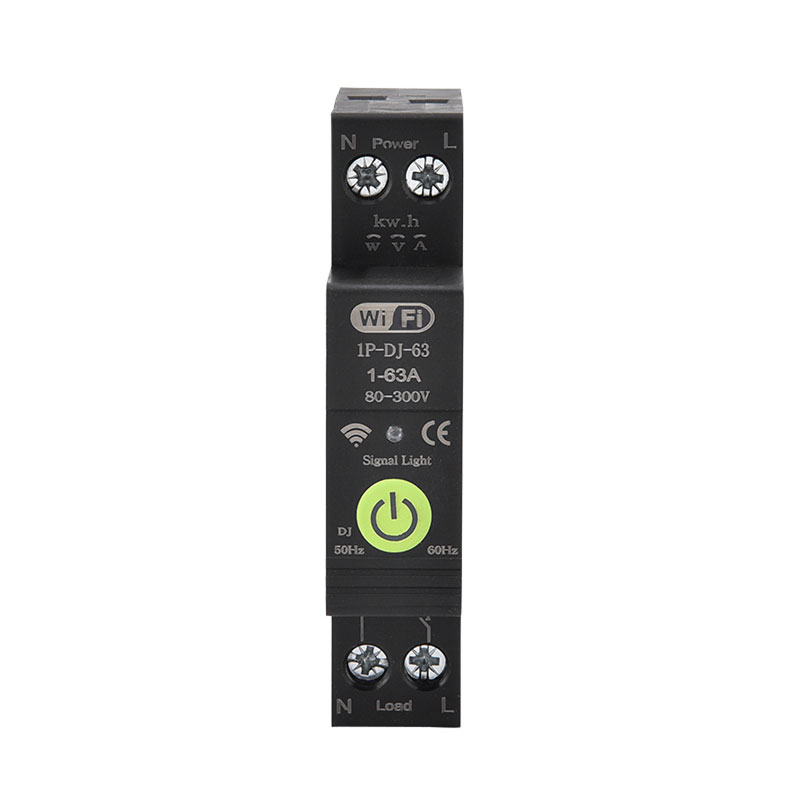
When evaluating electrical infrastructure, decision-makers must weigh legacy hardware against modern digital solutions. The differences in response time and diagnostic capability are massive.
Standard Miniature Circuit Breakers operate using thermal-magnetic mechanisms. The magnetic component handles instantaneous short circuits. The thermal bimetallic strip handles gradual overloads.
However, standard MCBs are designed to protect building wiring from catching fire. They are not engineered to protect sensitive end-point equipment. The bimetallic strip takes time to heat up and bend. A standard MCB might let a motor draw 400 percent of its rated current for several minutes before finally tripping. By the time the breaker reacts, the motor windings are already ruined.
Looking at recent industrial automation trends, facility managers are rapidly moving away from passive thermal-magnetic protection. The shift is heavily toward edge-computing devices at the panel level. Diagnosing electrical anomalies locally prevents catastrophic hardware failures. Relying on a bimetallic strip that takes minutes to heat up is increasingly viewed as an operational liability in critical infrastructure.
Upgrading to a smart breaker with motor protection bridges this critical gap. It functions as an all-in-one device. It protects the wiring while acting as a highly sensitive, adjustable electronic overload relay. Traditional breakers provide zero diagnostic feedback. They simply flip to the OFF position, leaving maintenance teams guessing. Intelligent devices log the exact electrical parameters leading up to the fault, providing a crystal-clear data trail.
Feature | Standard MCB | Smart Metering Breaker |
|---|---|---|
Trip Mechanism | Thermal-Magnetic (Passive) | Microprocessor & CT (Active) |
Response Time to Stall | Minutes (Relies on heat buildup) | Milliseconds to Seconds (Programmable) |
Diagnostic Feedback | None (Just an OFF switch) | Real-time voltage, amps, and fault logs |
Remote Alerts | No | Yes (Push notifications via App) |
Predictive Maintenance | Impossible | Enabled via historical energy trends |
Transitioning to intelligent distribution panels offers measurable improvements. You gain operational efficiency and significantly extend your equipment lifespan.
When a standard breaker trips, the only clue is a loss of power at the load. In remote pump stations or large industrial plants, a tripped breaker might go unnoticed for days. This delay often results in catastrophic flooding or spoiled inventory.
A WiFi metering circuit breaker solves this instantly. It uses integrated communication modules to send push notifications directly to a smartphone or centralized dashboard. The moment a motor stalls and the breaker disconnects, your team gets an alert. You see the exact time and the specific electrical anomaly. This immediate feedback loop allows for rapid, targeted troubleshooting.
Another distinct advantage is remote circuit management. If a facility manager receives a stall alert, they can remotely verify the circuit status. They can ensure power remains isolated while dispatching maintenance teams.
Once a mechanical jam is cleared, the circuit can often be reset remotely via the companion app. Objective safety protocols dictate that remote resetting should only happen after a physical inspection confirms the rotor is free. The remote control feature also lets users preemptively de-energize a circuit if the dashboard shows an abnormal, creeping increase in current draw.
The most significant financial benefit is predictive maintenance. Traditional maintenance relies on fixed schedules or reactive repairs. By utilizing historical data logging, technicians can track measured electricity consumption over time.
For example, a ventilation fan motor typically draws 5 amps. Over three months, it gradually begins drawing 6.5 amps. The energy log will clearly highlight this trend. This gradual increase is a classic indicator of mechanical friction, usually caused by deteriorating bearings. Spotting this early means you replace a cheap bearing today instead of waiting for a complete motor replacement tomorrow.
Intelligent protection devices are highly versatile. They benefit various sectors where electric motors are the heartbeat of daily operations.
Heating and cooling systems rely heavily on high-torque compressor motors. These compressors are susceptible to mechanical locking due to liquid slugging or extreme pressure differentials. When an HVAC compressor stalls, the locked rotor current quickly degrades the internal winding insulation. Advanced monitoring ensures power is severed the precise moment the compressor fails to turn over.
As any seasoned pump engineer will tell you, submersible pumps operate in brutal environments. Picture a heavy rainstorm. A basement sump pump sucks in a piece of gravel. The impeller jams instantly. Because these pumps sit in dark utility rooms, a traditional tripped breaker might not be discovered until ankle-deep water ruins the drywall. Smart monitoring provides the immediate notification required to clear the jam before water damage ensues.
Manufacturing facilities utilize hundreds of electric motors. Mechanical jams on a conveyor belt translate directly into locked rotor conditions. In a high-volume production environment, every minute of downtime burns revenue. Digital protection allows control room operators to instantly pinpoint which specific motor has stalled. This drastically reduces diagnostic time.
When a motor fails, electricians must determine if the fault is electrical or mechanical. The data provided by a digital breaker serves as a powerful preliminary diagnostic tool.
The first step is reviewing the energy log immediately preceding the trip event. Smart devices record the precise amperage and voltage at the exact time of disconnection.
Does the data show a slow, steady climb in amperage over several minutes before tripping? The issue is likely a thermal overload caused by the motor working too hard. Does the data show normal running current followed by an instantaneous, massive spike that sustains for a few seconds? This strongly indicates a mechanical stall.
Understanding electrical signatures is crucial for safe diagnostics. A normal startup draws 5 to 8 times the running current for about 0.5 to 2 seconds before dropping back to normal. A mechanical stall draws that same high current, but it remains flat and sustained until tripped. Meanwhile, a direct short circuit spikes to 50 or 100 times the running current in milliseconds. This indicates failed insulation.
If historical data shows a spike to 40 amps on a 5-amp motor lasting 3 seconds before tripping, it is almost certainly a mechanical stall. If it records a near-instantaneous spike of 300 amps, the motor windings have likely shorted completely.
Never repeatedly reset a breaker that is tripping due to a motor fault. If the data suggests a stall, mechanically isolate the motor. Attempt to turn the shaft by hand, ensuring power is completely locked out first. Once the mechanical obstruction is cleared, use the app to monitor the initial startup current closely. If the current returns to the baseline running amperage within two seconds, your intervention was successful.
Selecting the appropriate protection device requires careful consideration of the specific motor load and your digital infrastructure.
The most critical specification is the amperage rating. The breaker must be sized according to the motor's Full Load Amps, not just the normal running current. Look for a robust 1P+N 63A rating for standard commercial loads. The breaker must possess the correct internal hardware to handle temporary startup surges. Always consult the motor nameplate data to determine the correct maximum amperage.
A high-quality intelligent breaker allows you to define custom overcurrent thresholds. Look for a device with a dedicated motor protection function. You need to set specific parameters, such as tripping the circuit if the current exceeds 30 amps for more than 3 seconds. This programmability ensures the breaker ignores harmless startup surges but reacts instantly to a genuine stalled rotor.
The physical breaker is only half of the solution. The software ecosystem is equally important. WiFi is ideal for residential and light commercial settings, allowing direct connection to cloud services. Zigbee suits environments with multiple smart devices requiring local mesh networking. For heavy industrial applications, RS485 allows hardwired integration into central PLCs.
A stalled motor is a costly and dangerous hazard. Yet, it is entirely preventable with modern electrical technology. Advanced circuit protection with energy monitoring offers real-time data, instant alerts, and highly precise tripping mechanisms.
This technology takes the guesswork out of electrical safety. By upgrading your motor protection systems, you prevent catastrophic failures, reduce downtime, and significantly extend the lifespan of your critical equipment. Ready to upgrade your electrical panels? Explore the full range of intelligent protection solutions at People Elect to find the exact device for your facility's needs.
Yes. By setting precise current thresholds, an intelligent breaker cuts power the moment a stall occurs. It reacts based on real-time data. It disconnects the circuit long before the internal motor windings have time to overheat, melt, and cause permanent damage.
Yes. Because these devices continuously log measured electricity consumption, you can establish a baseline. If a motor normally draws 10 amps but slowly creeps up to 12 amps over a few months, the app will show this trend. This creeping current usually indicates bearing wear or mechanical friction, allowing you to perform maintenance before a complete stall happens.
In many applications, no. An advanced smart breaker with a dedicated motor protection function integrates the capabilities of an electronic overload relay directly into the breaker itself. You can program precise overload curves and time delays via the app, eliminating the need for bulky secondary relays in the panel.
Yes. The core protection mechanisms and programmed trip thresholds are stored locally on the device's internal microprocessor. It will still trip instantly to protect the motor during a stall. You simply will not receive the remote push notification until the local network connection is restored.
It installs similarly to a standard DIN-rail circuit breaker, utilizing standard wiring terminals. However, installation involves working inside a live electrical distribution panel with potentially lethal voltages. It should strictly be installed and commissioned by a licensed electrician.
Absolutely. When the motor is running normally, the device acts as a highly accurate energy meter. It logs voltage, amperage, active power, and total energy consumption. This helps you track electricity costs and identify usage trends over time.
Motors naturally draw a high inrush current for a fraction of a second when starting. These digital breakers can be configured with a programmable time delay. This allows the breaker to ignore the brief startup surge. It will trip immediately if the high current sustains beyond the expected startup window, indicating a mechanical stall.


