Views: 0 Author: Site Editor Publish Time: 2026-11-23 Origin: Site
Imagine sitting in your living room. The lights suddenly begin flickering wildly. In the kitchen, your refrigerator motor groans unusually loud. Meanwhile, a distinct burning plastic smell drifts down the hallway from a bedroom outlet. Many homeowners panic in this situation. They assume their house is experiencing a standard power surge. However, these frightening anomalies often point to a much more insidious electrical fault. Enter the loose neutral wire. Veteran electricians call it the silent killer of home electronics. A compromised neutral connection creates catastrophic voltage imbalances. This phenomenon can destroy thousands of dollars worth of appliances in mere minutes.
A common and dangerous misconception is that standard plug-in power strips will save your devices from these severe electrical anomalies. Unfortunately, a loose neutral is a completely different beast from a momentary lightning strike. This critical difference renders standard surge protection entirely useless.
So, can you actively protect your property? Yes. No consumer device can physically repair a broken utility cable outside your walls. However, a dedicated high voltage protector for home will instantly flag the issue. It detects the resulting severe voltage drift. Then, it physically cuts the power before your appliances suffer damaging electrical loads. This comprehensive guide will explain the empirical dangers of a loose neutral. We will explore how to spot the early warning signs and why upgrading your electrical panel is the ultimate solution to safeguard your property.
A Loose Neutral is Highly Destructive: It causes the voltage in a home to fluctuate wildly. This sends dangerous high voltage to some appliances and damaging low voltage to others.
Standard Surge Protectors Cannot Stop It: Regular power strips protect against microsecond lightning strikes. They do not stop the continuous voltage drift caused by a loose neutral connection.
Active Relays are the Ultimate Defense: A reliable voltage protector detects these dangerous fluctuations. It physically disconnects power before thermal damage occurs.
Visibility is Key: Upgrading your panel with modern diagnostic tools allows homeowners to see real-time voltage and current data. This acts as an early warning system for loose utility connections.
Professional Help is Mandatory: If your protection device repeatedly flags an electrical anomaly, you must act. It is a definitive sign to call the utility company or a licensed electrician immediately.
To grasp why a loose neutral is so destructive, it helps to visualize how a standard split-phase residential electrical system operates. In North America and many other regions, homes are supplied with two hot wires and one neutral wire. Each hot leg carries 120 volts relative to the neutral. This provides standard power for outlets and everyday lighting. When both hot legs are combined, they provide 240 volts for heavy-draw appliances like ovens and central air conditioners.
The best way to conceptualize this architecture is by imagining a perfectly balanced seesaw. The two hot legs are the seats on either end. The neutral wire acts as the sturdy pivot point perfectly centered in the middle. As long as that pivot point remains secure, the system stays locked at 120 volts on each side. It does not matter how many devices you plug in.
However, if that pivot point becomes loose or disconnects entirely, the seesaw violently loses its anchor. The voltage is no longer locked. Depending on the electrical load active in the house, one leg might plummet to 80 volts. The other leg is then forced to absorb the difference, rocketing up to 160 volts or more.
When comparing electrical faults, a loose neutral is exponentially more destructive to property than a loose live wire.
Specifically, if a live wire becomes loose, the typical result is a localized loss of power. The circuit simply breaks. Whatever is plugged into that specific bedroom or kitchen outlet stops working. A loose live wire can cause localized arcing. This is undoubtedly a legitimate fire hazard. Yet, the damage is usually contained within a single steel or plastic junction box.
In contrast, a loose neutral shifts the voltage balance across the entire electrical panel. It represents a systemic failure rather than an isolated one. Instead of just dropping power, the system actively delivers a toxic amount of power. Sending 160 volts into a modern smart television designed strictly for 120 volts will instantly fry its internal power supply. It melts delicate circuit boards and creates a severe, widespread fire hazard across multiple rooms simultaneously.
One of the most visible and immediate symptoms of a loose neutral is highly erratic lighting. You might notice a bizarre inverse relationship. When you turn on a heavy-draw appliance like a microwave, the lights in the kitchen dim significantly. At the exact same time, the lamps in the living room burn unusually bright. This phenomenon is the physical manifestation of the seesaw effect in action. The heavy appliance pulls the voltage down on its specific leg. This forces the voltage on the opposite leg to spike uncontrollably.
Beyond erratic lighting, appliances subjected to extreme voltage imbalances will exhibit severe physical distress. Devices receiving too much voltage will overheat rapidly. This often causes capacitors to burst and electronic components to suffer dielectric breakdown.
Furthermore, appliances receiving undervoltage are equally at risk of catastrophic failure. Electric induction motors, such as those buried inside your refrigerator or HVAC compressor, must work much harder to draw the necessary current when the voltage drops. This strain causes the motor windings to overheat. They will hum aggressively and eventually burn out months or years before their expected lifespan.
A loose connection inherently creates high electrical resistance. Electricity struggles to jump across the microscopic gaps of a degraded neutral wire. This creates electrical arcing. This invisible arcing generates immense localized heat, frequently exceeding 2,000 degrees Fahrenheit. Consequently, this heat can melt wire insulation and scorch outlet receptacles. It produces a distinct fishy or burning plastic odor. If you hear faint crackling noises originating from your breaker panel or wall outlets, treat it as an active emergency requiring immediate professional investigation.
Homeowners frequently ask if there is a consumer device that can definitively diagnose a broken wire out on the street. A high voltage protector cannot physically see the severed cable at the utility pole. However, it is highly effective at detecting the exact symptom of that broken wire: severe voltage drift. By constantly monitoring the incoming power supply at the panel, the device acts as a vigilant gatekeeper. The moment the neutral connection fails and the destructive seesaw effect begins, the protector recognizes the anomaly and takes immediate action.
These modern protection devices operate using precise, microprocessor-controlled electromagnetic relays. When a neutral drops, the voltage on Phase A might spike to 155V. This triggers an overvoltage event. Meanwhile, Phase B plummets to 85V, triggering an undervoltage event.
The protector is manually set with specific safe operating thresholds. For example, an engineer might program a maximum ceiling of 135V and a minimum floor of 95V. The millisecond the incoming power breaches these safety boundaries, the internal relay physically opens. It breaks the circuit and completely disconnects the load. By instantly severing the power feed, the device effectively flags the loose neutral event. It isolates your sensitive electronics from the grid's toxic voltage.
There is a massive and dangerous misconception in the consumer market regarding electrical protection. Many homeowners mistakenly believe that buying premium power strips equipped with surge protection will save them from a loose neutral scenario. This is empirically false.
Standard surge protectors utilize internal components called Metal Oxide Varistors. These components are engineered specifically to absorb microsecond transient spikes, such as the massive energy burst from a nearby lightning strike. They work by shunting that excess voltage to the ground wire for a fraction of a second. A loose neutral does not create a microsecond spike. It creates a continuous rise in RMS voltage. If a varistor is subjected to a continuous 160V, it cannot dissipate the sustained thermal energy. It will rapidly experience thermal runaway, overheat, violently rupture, and frequently catch fire. This offers absolutely zero protection to your plugged-in devices.
Feature | Standard Surge Protector (Power Strip) | Dedicated Voltage Protector (Relay) |
|---|---|---|
Primary Function | Absorbs microsecond voltage spikes. | Monitors continuous voltage drift and disconnects power. |
Threat Defense | Lightning strikes, grid switching transients. | Loose neutrals, grid brownouts, sustained overvoltage. |
Mechanism | Shunts excess energy to ground via MOVs. | Physical mechanical separation via magnetic relay. |
Fire Risk During Loose Neutral | High. Components will overheat and rupture. | Zero. The device safely cuts the circuit. |
Looking at broader electrical infrastructure trends, utility-side neutral faults are becoming increasingly prevalent. This is largely due to aging grid infrastructure and the rising frequency of severe weather events. Transformer degradation and falling tree limbs frequently compromise overhead utility lines. Consequently, the electrical safety industry is experiencing a massive paradigm shift.
Electrical engineers and grid experts are moving away from passive, point-of-use surge protection. Instead, they are leaning heavily into active, real-time voltage monitoring at the residential panel level. Homeowners are no longer viewing digital diagnostic relays as luxury smart-home additions. They are now considered mandatory baseline upgrades. This reflects a growing consumer demand for proactive home energy management. It ensures that the home's internal network remains shielded from external utility decay.
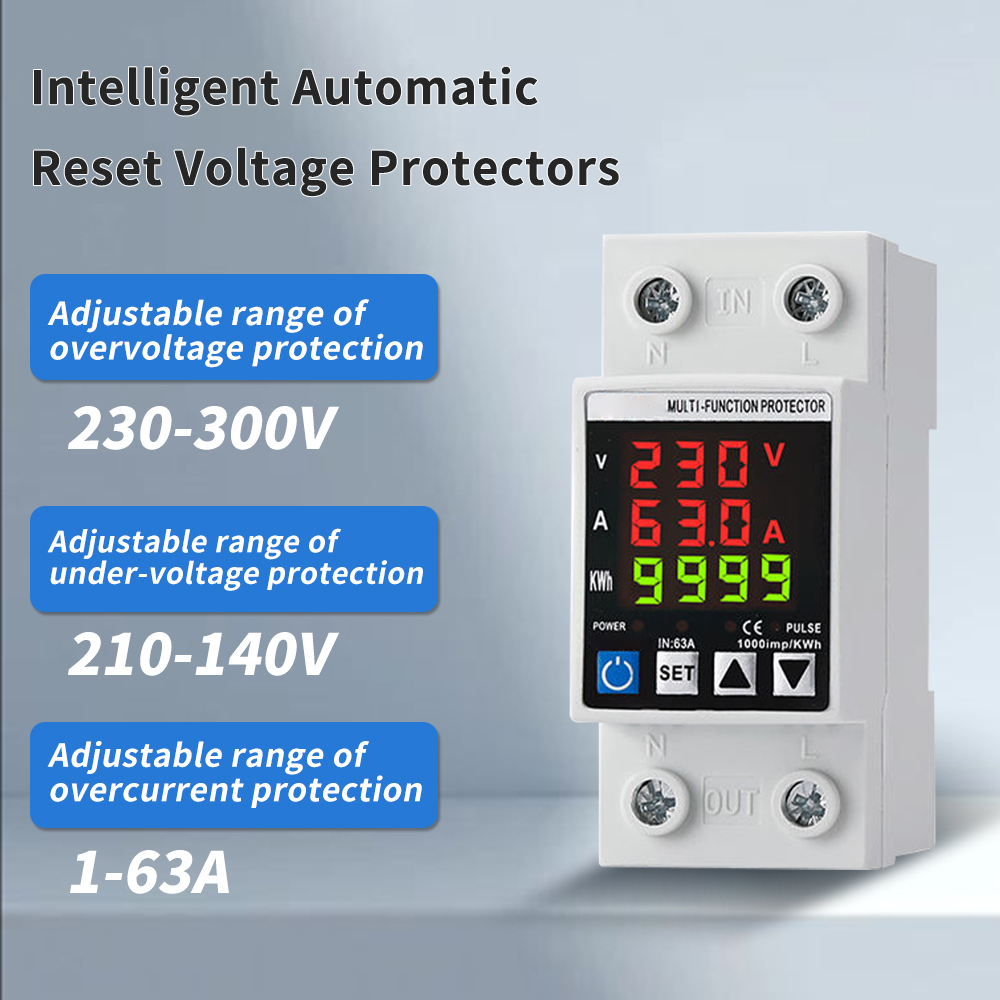
Visibility is a critical component of modern electrical safety. Upgrading your panel with a three display overvoltage and undervoltage protector provides homeowners and technicians with an unprecedented diagnostic tool. Older protection devices were essentially black boxes. They tripped without providing any context, leaving you guessing why the house went dark.
Today's modern units feature bright digital LED screens that provide real-time telemetry of your electrical supply. They typically display the exact Voltage, the real-time Current being drawn by your appliances, and active wattage data. If a neutral wire is slowly degrading, a homeowner can physically watch the digital voltage display drift abnormally high or low as appliances cycle on and off. This real-time data transforms the device from a simple safety switch into a powerful early warning system.
Advanced protectors are dynamic safety systems, not just static fuses. The electrical grid is inherently volatile. Minor, temporary voltage sags are quite common. High-quality devices feature intelligent auto-recovery functions. Suppose a tree branch temporarily disrupts the utility neutral during a storm but then falls away. The grid stabilizes. The protector will continue to monitor the incoming line. Once the voltage remains within safe parameters for a set duration, the device automatically closes the relay. It restores power safely, preventing nuisance outages.
Selecting the right hardware is critical for seamless integration. A single phase overvoltage protector must be properly sized to handle the maximum electrical load of the circuit it is defending. If you install a protector with a lower amperage rating than your circuit breaker, the protector itself will become a bottleneck. It will overheat under heavy load.
A 63A model is widely considered the most versatile and robust choice for residential sub-panels or whole-house integration in smaller properties. It provides a substantial buffer for high-current draw situations without risking internal relay fusion. Look for models that offer adjustable overvoltage values and adjustable recovery delay times. This allows an electrician to tailor the hardware to the specific sensitivity of your home equipment.
Unlike bulky plug-in power strips, true voltage protectors are designed for permanent, streamlined installation. They fit inside your main electrical panel or sub-panel using a standard 35mm DIN-rail mounting system. By installing the device directly after the main breaker, it monitors the utility feed before it branches out to individual rooms. This effectively protects the entire downstream circuit rather than just a single wall outlet behind the television.
The most dangerous mistake a homeowner can make is assuming the protection device is defective simply because it keeps cutting the power. If the device is consistently tripping and the digital display shows extreme voltage fluctuations, the protector is doing exactly what it was engineered to do. It is preventing a catastrophic electrical fire. Never attempt to bypass the relay or wire your panel directly to the grid to restore power.
Do not touch any exposed wiring or open the dead-front metal cover of your electrical panel. Conduct a brief visual inspection of your property from a safe distance. Look outside for downed tree branches resting on the utility lines leading to your house. Check for visible damage, scorching, or frayed wires at the weatherhead, which is the pipe where utility lines enter your home. Sniff for any distinct burning smells emanating from the meter box outside.
A loose neutral is rarely a simple DIY fix. It is almost always a severe infrastructure issue. If the issue is affecting your entire home, the fault is likely at the utility transformer, the service drop, or inside the sealed electrical meter box. Call your utility company's emergency line immediately. Report a suspected dropped neutral. Utility companies prioritize these calls due to the severe fire risk.
If the utility company clears their side of the equipment, contact a licensed residential electrician immediately. Provide them with the exact voltage readings displayed on your panel protector. This specific data helps them quickly isolate whether the loose connection is at your main breaker busbar or hidden within a specific branch circuit junction box.
A loose neutral remains one of the most dangerous and unpredictable electrical faults a home can experience. It is fully capable of destroying thousands of dollars in appliances and sparking devastating fires. Standard power strips offer absolutely zero protection against this continuous voltage drift. By proactively upgrading your electrical panel with a reliable voltage monitoring relay, you gain total peace of mind. These vigilant devices ensure safety, provide real-time diagnostic visibility, and shield your valuable electronics from the unpredictable nature of aging grids.
Don't wait for a grid failure to destroy your home electronics. Evaluate your panel's defense strategy today and explore professional-grade protection solutions tailored to your infrastructure at People Elect.
Yes. A loose neutral can cause severe arcing at the connection point, generating immense, concentrated heat. Furthermore, it causes extreme overvoltage that can rapidly overheat appliance motors and sensitive electronic components. This frequently leads to dangerous electrical fires inside the walls or at the appliance itself.
No. A whole-house surge protector is engineered exclusively for microsecond transient voltage spikes, such as those caused by lightning strikes. You need a dedicated voltage protector relay to actively detect and physically disconnect power during a continuous loose neutral event.
If your single phase overvoltage protector trips frequently, it is sensing that the incoming grid voltage is drifting outside of your pre-programmed safe parameters. This could be due to general neighborhood grid instability, heavy industrial loads turning on nearby, or a highly dangerous loose neutral connection on your property.
This fault can happen at multiple points along the electrical delivery path. It is commonly found at the utility transformer on the street, the service drop attached to your roof, inside the sealed electrical meter box, at the main breaker panel's neutral busbar, or hidden within a specific branch circuit junction box inside your home.
Testing for a loose neutral involves measuring voltage across different phases while applying a load. An electrician will use a digital multimeter at the panel. If turning on a heavy appliance causes the voltage on one leg to drop significantly while the other leg spikes proportionally, a loose neutral is confirmed. Homeowners should rely on panel-mounted digital displays rather than attempting live testing themselves.
A loose neutral itself does not directly consume large amounts of power, but the extreme inefficiency it causes can slightly affect your bill. More importantly, the undervoltage conditions force appliance motors to draw higher current to operate, which can register as increased consumption before the appliance ultimately burns out.