Views: 0 Author: Site Editor Publish Time: 2026-11-02 Origin: Site
Have you ever faced sudden power loss and had to blindly navigate a dark basement with a flashlight? Traditional electrical panels leave property owners guessing about the root cause of electrical faults. Today, modern infrastructure transforms this passive safety measure into an active communication network. This guide breaks down exactly how an intelligent electrical system reports trip status instantly. You will learn the mechanics behind the alerts that keep your property secure and your operations running smoothly.
Real-Time Connectivity: Modern devices bridge the gap between physical electrical faults and digital smartphone notifications.
Instant Alerts: Push notifications reach your device the exact second a circuit trips to ensure you are never left in the dark.
Data Accuracy: Advanced internal sensors easily distinguish between a deliberate manual switch-off and a critical electrical fault.
System Integration: Secure encrypted cloud servers continuously monitor your electrical health for predictive maintenance.
Safety and Efficiency: Upgrading your infrastructure adds a critical layer of property safety while streamlining daily energy management.
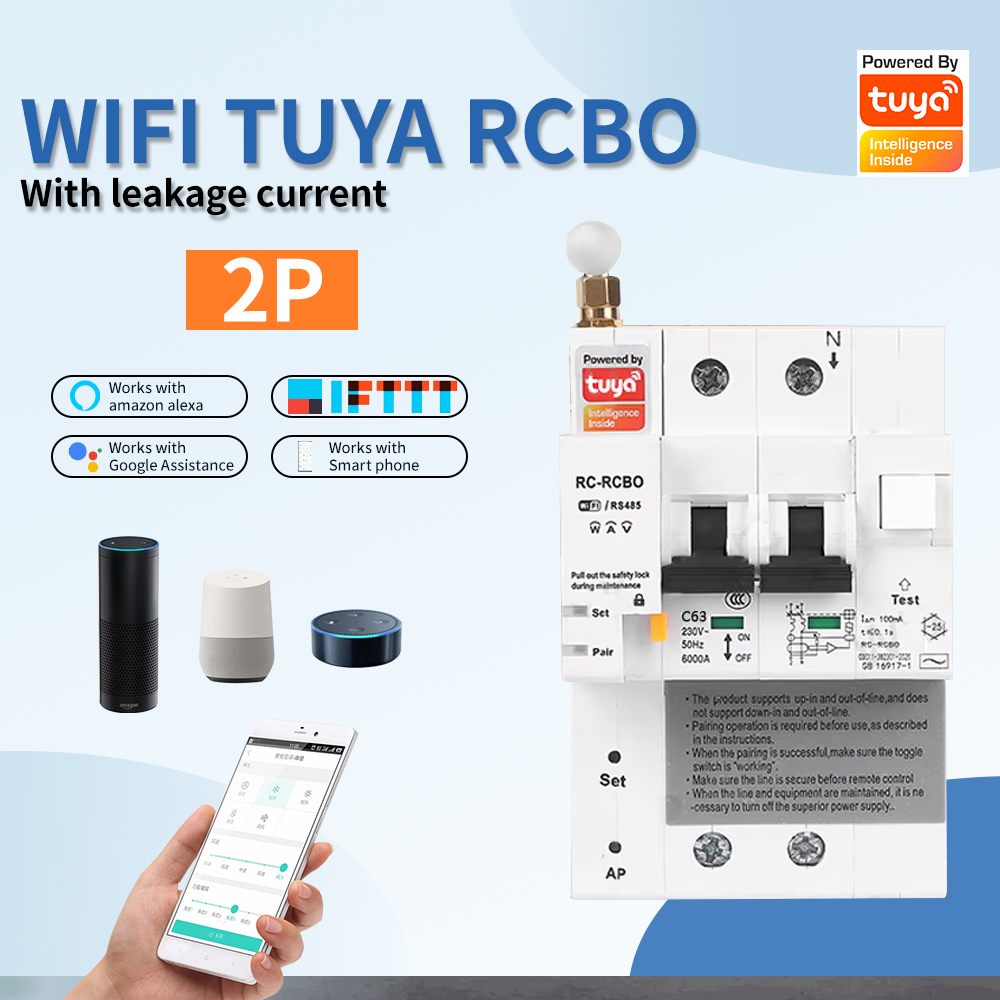
Understanding the internal hardware is crucial for upgrading your electrical infrastructure effectively. At its core, a smart circuit breaker contains standard thermal-magnetic protection components. These mechanical parts serve as your primary defense. They physically break the circuit during emergencies like severe overloads. What elevates this hardware is the integration of a sophisticated built-in communication module.
This module houses a dedicated WiFi chip and an optimized antenna. It ensures stable signal transmission even through thick metal panel enclosures. A microcontroller unit acts as the brain of the device. It constantly monitors electrical flow in real time and detects minute state changes across the connected circuits. When a physical change occurs, the microcontroller processes the data instantly and communicates directly with your local wireless router. Most of these units operate exclusively on the 2.4GHz WiFi band. This specific frequency penetrates concrete walls and metal boxes far more effectively than 5GHz networks. It guarantees a reliable connection from the utility room to your living space.
What exactly triggers a status report to your mobile phone? First and foremost, the system is engineered to differentiate between various physical events. A manual intervention means someone physically flipped the switch off. The system logs this merely as a standard operational event. In contrast, an automatic fault triggers a critical emergency notification requiring immediate user attention.
Internal digital sensors continuously measure vital metrics like current, voltage, and internal temperature. They sample these data points thousands of times per second. If the current exceeds the rated limit—for instance, surpassing 63A on a standard 2P unit—the hardware trips mechanically. Simultaneously, the digital sensors record the exact fault parameters. The microcontroller registers this event as a high-priority action. It packages the fault data into a secure digital packet containing the exact time, date, and specific fault type. High-quality modules ensure this mechanical-to-digital translation happens in mere milliseconds. This rapid response prevents electrical fires and protects sensitive household appliances. Furthermore, if your internet is down during the event, the microcontroller stores this data locally. It uploads the historical log the moment connectivity is restored.
The journey of an alert signal from your basement panel to your pocket involves three distinct technological steps. Step one is on-device processing at the hardware level. The moment a critical fault is detected and the electrical path is broken, the microcontroller generates an internal digital interrupt signal.
Specifically, step two involves rapid data transmission. A TUYA smart WiFi circuit breaker sends this packaged signal to a secure cloud server via your local router. IoT devices utilize lightweight communication protocols like MQTT for this exact transmission. This guarantees fast data delivery even on sluggish internet connections. Finally, step three is the server push notification process. The cloud application receives the encrypted data and identifies your linked account. It then pushes a detailed alert directly to your smartphone app. This entire journey usually takes less than two seconds.
Transmission Phase | Action Performed | Estimated Time |
|---|---|---|
Phase 1: Detection | Sensors identify overload and trigger mechanical trip. | 10 - 30 milliseconds |
Phase 2: Processing | Microcontroller compiles fault data into a digital packet. | 50 - 100 milliseconds |
Phase 3: Transmission | WiFi module sends data to the local router. | 100 - 200 milliseconds |
Phase 4: Cloud Routing | Server processes data and matches user account. | 200 - 500 milliseconds |
Phase 5: Delivery | Smartphone app receives and displays push notification. | 500 - 1000 milliseconds |
Looking at broader industry trends, the shift towards intelligent home and commercial energy management is accelerating rapidly. Recent market analyses highlight a massive growth in consumer demand for predictive maintenance over traditional reactive repairs. As smart grid technologies mature, IoT-enabled panel boards are transitioning from luxury upgrades to standard requirements in modern energy-efficient building codes. Facility managers and homeowners now demand granular control over power consumption. This evolution reflects a significant move towards decentralized energy monitoring. By identifying micro-faults before they escalate into major failures, intelligent reporting systems are fundamentally reshaping how we approach building electrical safety.
When upgrading an electrical panel, understanding the technical distinctions between different protection devices is critical for operational efficiency. A standard connected breaker is primarily engineered to manage overcurrent and short-circuit scenarios. It offers excellent remote power control and basic energy monitoring. However, specific applications require far more advanced diagnostic capabilities.
For enhanced life-safety protection, a smart leakage current circuit breaker goes much further. Beyond basic overload protection, these sophisticated devices incorporate a zero-sequence current transformer. This internal sensor continuously measures the balance of electrical current flowing between the live and neutral conductors. If insulation fails in a wet environment like a bathroom, a microscopic fraction of current leaks to the ground. The transformer detects this imbalance, often as low as 30mA, and triggers an immediate disconnect. Advanced firmware allows the mobile app to specifically categorize the exact cause of the interruption. You can clearly differentiate between a standard thermal overload and a highly dangerous ground fault leakage.
Feature | Standard WiFi Breaker | Smart Leakage Breaker |
|---|---|---|
Primary Function | Overload & Short Circuit Protection | Overload, Short Circuit & Earth Fault Protection |
Detection Mechanism | Thermal-Magnetic Sensors | Thermal-Magnetic + Zero-Sequence Transformer |
Data Reporting | Power usage, generic trip status | Specific fault type categorization |
Best Use Case | Lighting circuits, non-critical loads | Wet areas, heavy appliances, whole-home mains |
The true value of an intelligent electrical system lies in its ability to translate physical events into actionable digital data. Proper configuration ensures you receive accurate safety alerts without being overwhelmed by unnecessary notifications. Before initiating the software setup, verify that your smartphone is connected to a 2.4GHz network. These modules cannot communicate with 5GHz bands during the initial pairing phase.
To connect, simply put the hardware into pairing mode via the physical button. You will typically see the LED indicator blink rapidly. Follow the on-screen app instructions to finalize the wireless sync and watch for the LED to shift to a solid state. Once connected, customizing your alert thresholds is highly recommended. You can set specific upper and lower limits for daily energy consumption or voltage. To mitigate false trips caused by high inrush currents from heavy motor loads, carefully adjust the sensitivity settings within the app. Always consult a qualified licensed electrician before altering critical safety thresholds. This ensures your panel's physical integrity remains uncompromised.
Even the most robust digital reporting systems occasionally experience temporary communication drops. If your device suddenly appears offline in the management application, a systematic troubleshooting approach is required. First, verify the received signal strength indicator within the app. Metal distribution boxes act as Faraday cages and often block weak WiFi signals. Installing a WiFi extender near your electrical panel is a highly practical solution.
Furthermore, consumer-grade routers sometimes hit a hard limit on concurrent IoT devices. Restarting your router or assigning a static IP address to the panel module can clear IP conflicts and stabilize the connection. It is also vital to keep your firmware updated. Manufacturers frequently release over-the-air patches to refine detection algorithms and improve connection stability. Keep in mind that if the digital module temporarily fails, the mechanical protection remains fully active. Your home will never be left vulnerable to electrical fires. Physical safety always overrides digital convenience.
Upgrading to a connected panel is a forward-thinking investment that modernizes your electrical backbone effectively. By bridging the gap between heavy-duty mechanical protection and instant digital communication, these systems provide proactive safety and highly accurate data management. Whether you are monitoring a primary residence or managing remote rental properties, the peace of mind gained from real-time alerts is invaluable. Embrace the future of electrical safety today. Evaluate your current infrastructure and explore the comprehensive range of intelligent protection devices at People Elect to make your power management smarter, safer, and remarkably more efficient.
Yes, absolutely. The primary safety mechanisms—both the thermal-magnetic overload protection and the electronic residual current detection—are hardwired into the physical device. They function entirely independently of your internet connection. If a short circuit occurs during an outage, the unit will still trip mechanically to ensure safety. Only the remote reporting and smartphone notifications are temporarily disabled until the network is restored.
Most advanced models are equipped with an internal motorized mechanism that allows for remote switching. However, for strict safety reasons, if the system has tripped due to a severe electrical fault such as a hard short circuit or ground fault, the firmware may require a physical inspection and a manual reset at the panel. Remote resetting is generally reserved for manual shut-offs or minor resolved overloads.
Compatibility is primarily determined by the physical mounting standard and the electrical specifications. Most intelligent units are designed for standard 35mm DIN-rail mounting. This standard is ubiquitous in modern distribution boards. You must also verify that the amperage rating matches the wire gauge and load requirements of the specific circuit. Consulting with a certified electrician is strongly recommended to ensure full compliance with local codes.
No, the data consumption is exceptionally low. These devices communicate using lightweight IoT protocols. The data packets containing status updates, voltage readings, and trip notifications consume only a few megabytes of bandwidth per month. They will not negatively impact your home network speed or exceed standard internet data caps.
An energy monitor is a passive device. It uses current transformers to measure power consumption and report data, but it cannot control the flow of electricity. A smart breaker is an active safety device. It provides both the comprehensive data monitoring capabilities of an energy monitor and the physical protection of a traditional breaker. This allows it to automatically disconnect power during a fault or be switched off remotely.
Yes, it can significantly impact your energy costs. By providing granular real-time data on power consumption, you can easily identify energy-hungry appliances. Many models feature scheduling capabilities. This allows you to automatically cut power to non-essential circuits during peak pricing hours or when the building is unoccupied.
Leading manufacturers prioritize cybersecurity by utilizing encrypted cloud servers and secure communication protocols like MQTT. While no IoT device is entirely immune to cyber threats, keeping your device firmware updated and securing your home WiFi network with strong passwords drastically minimizes any risk. Furthermore, remote switching controls are designed so that a hacker cannot override the physical mechanical trip safety mechanisms.